Core Components of a Complete Corporate Visual Identity: 2026 Guide
The Visual Friction Crisis: Why Disjointed Brand Assets Bleed Corporate Revenue
Consider this common friction point across modern corporate operations: A CEO opens their company's digital ads on social platforms and sees one style of typography and shade of blue. They navigate to their own web portal, only to find a completely different color scheme and font hierarchy. When reviewing the physical business cards handed out by their sales team, the corporate logo appears distorted and misaligned with digital assets.
This visual disconnect is not merely an aesthetic flaw—it is a silent conversion killer that directly erodes corporate brand equity.
The subconscious mind of a modern consumer constantly seeks patterns of order and legitimacy. When exposed to fragmented visual signals from a single business, potential buyers subconsciously register inconsistency as a risk factor indicating poor management or unreliability. The result? Bounce rates surge, prospective clients defect to competitors, and ad spend yields diminishing returns.
The root cause of this breakdown lies in an executive failure to understand and systematically deploy the 7 core components of an integrated corporate visual identity system.
In this strategic guide by Osol Digital Agency, we dissect the essential building blocks of a high-converting visual identity system, showing you how to turn design assets into scalable revenue-generating tools.
Deconstructing the Infrastructure: The 7 Core Building Blocks
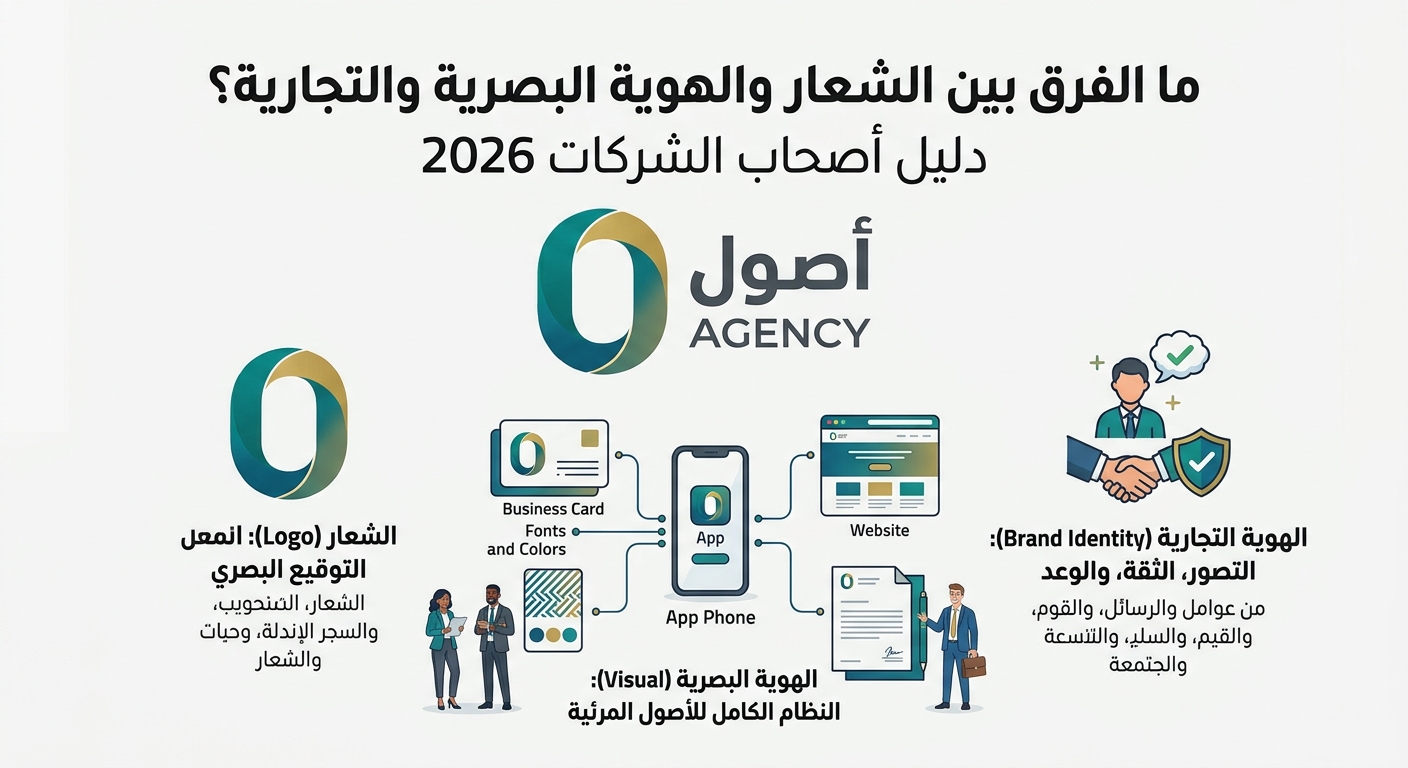
When commissioning comprehensive Visual & Corporate Identity Design Services from a specialized agency, you build an integrated visual architecture comprising seven essential components:
1. Responsive Multi-Device Logo Architecture
In modern digital ecosystems, a logo cannot remain a static graphic stamp. A professional logo is engineered as a responsive system built for multi-screen adaptability:
- Primary Corporate Mark: The complete master lockup featuring the icon and corporate wordmark.
- Horizontal & Vertical Layout Adaptations: Engineered for website headers, pitch decks, and field signage.
- Favicon & Micro-Icons: Highly simplified, scalable marks designed for smartwatch interfaces, mobile apps, and AI search previews.
- Monochrome & High-Contrast Systems: Black-and-white vector variations for luxury debossing, merchandise, and field production.
2. Psychology-Driven Color Palette Architecture
Color selection in executive branding is not a matter of personal artistic preference—it is psychological engineering. A complete color system includes:
- Primary Brand Colors: 2 to 3 core colors that dominate 60% of brand touchpoints, building immediate subconscious recognition.
- Secondary & Accent Palettes: Supporting tones used for contrast, UI buttons, and data visualization.
- Comprehensive Color Coding: Exact definitions across RGB (screens), CMYK (print), HEX (web UI), and Pantone (specialized manufacturing) to ensure zero color deviation across global production lines.
3. Custom Typography Architecture & Hierarchy
Typography serves as the visual voice of your corporate persona. Geometric, bold type communicates stability and force; elegant serif type conveys heritage and luxury. This component comprises:
- Primary Display Fonts (Headers): Commanding typography for titles and key value propositions.
- Body Copy Fonts: Clean, highly legible fonts engineered for prolonged digital reading across screens and mobile UI.
- Commercial Licensing Compliance: Official commercial web and print licensing for both Arabic and English font pairings to protect your firm from IP liabilities.
4. Brand Patterns & Supporting Graphic Assets
Have you ever recognized a global brand instantly from a subtle pattern background on an ad creative before even seeing their logo?
That is the power of custom brand patterns. Derived directly from logo geometry, these graphic elements create a rich visual layer that reinforces brand identity across digital ads, packaging, and web layouts.
5. Imagery & Art Direction Standards
A visual identity system must dictate how photography and visual media are executed. This includes color grading parameters (warm vs. cool tones), lighting standards, framing rules, and subject composition, ensuring that all published ad creatives and web assets maintain an authoritative corporate feel.
6. Physical & Digital Corporate Collaterals
Translating visual theory into operational touchpoints used by team members and clients daily:
- Administrative Collaterals: Business cards, official letterheads, corporate envelopes, and presentation folders.
- Financial & Legal Assets: Official invoice templates, receipts, and contract covers.
- Field & Operational Applications: Staff uniforms, fleet vehicle wraps, trade show exhibition booths, and corporate signage.
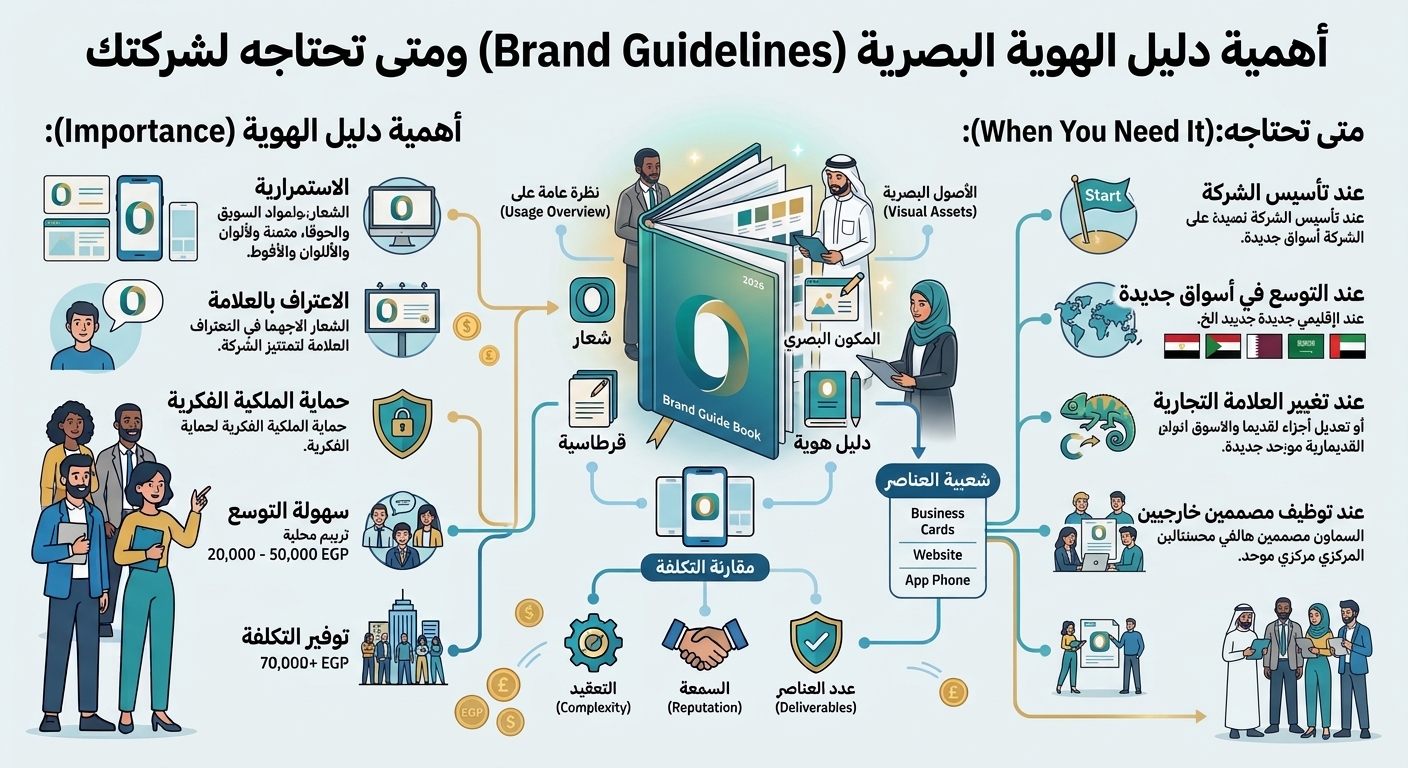
7. The Master Brand Guidelines Manual (Brand Book)
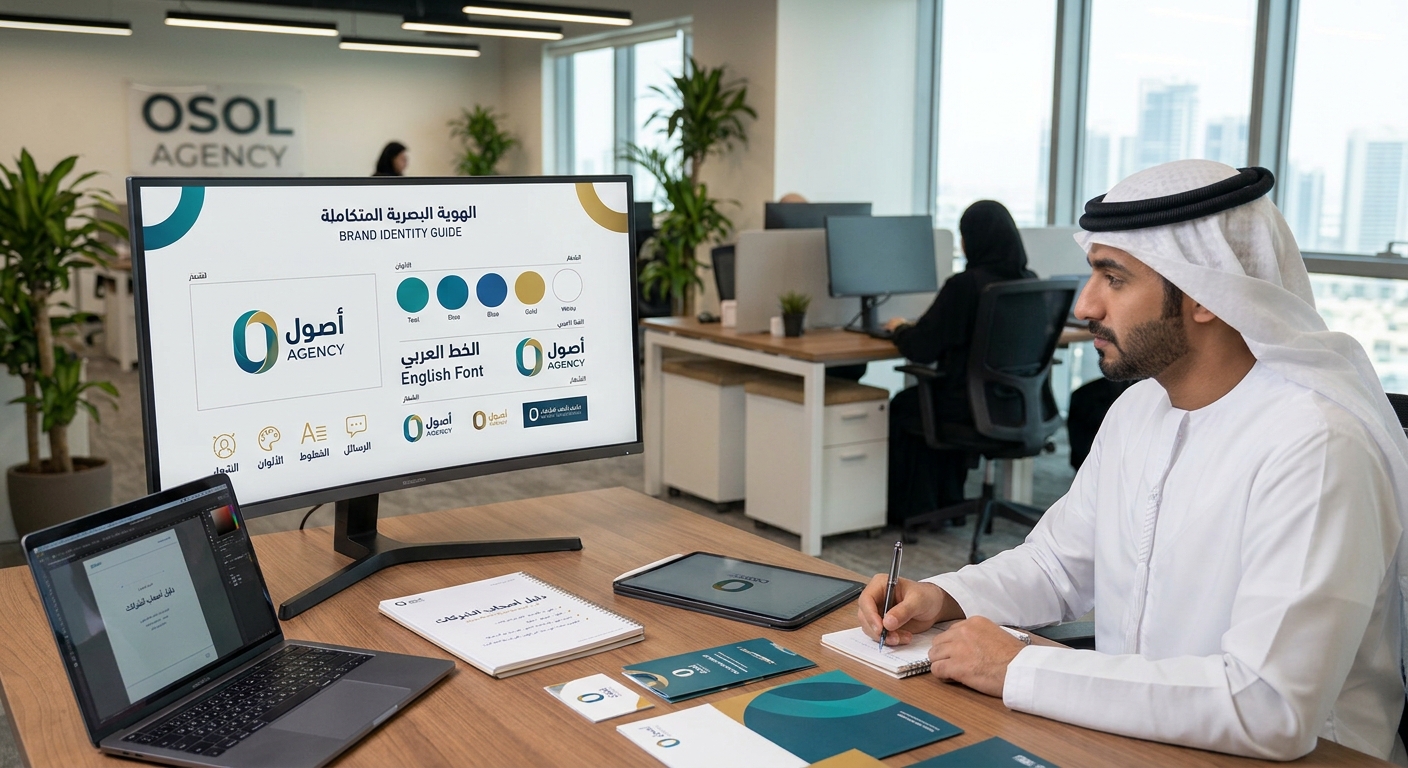
This is the master rulebook for your brand asset. A comprehensive manual detailing clear space rules, scaling constraints, unauthorized use cases, and design specifications, empowering internal teams and third-party agencies to execute your brand flawlessly without distortion.
To engineer these seven components for your enterprise, explore our specialized corporate identity design agency solutions at Osol Digital Agency.
How Integrated Visual Systems Drive Conversion Rate Optimization (CRO)
The true commercial value of a visual identity system emerges not from individual assets, but from the **seamless harmony between all seven components throughout the buyer journey**.
Let's trace a potential client's subconscious path to understand how integrated branding converts traffic into revenue:
- Initial Ad Exposure: A prospect notices a digital ad, instantly captured by the unique brand pattern and primary color contrast in under 2 seconds.
- Landing Page Arrival: Clicking through to the landing page, the prospect encounters identical typography, crisp responsive logos, and cohesive art direction, triggering an immediate feeling of security and corporate legitimacy.
- Document & Proposal Review: Upon receiving a formal proposal presented on official, beautifully formatted corporate templates, subconscious trust transforms into a decisive buying decision.
Frequently Asked Questions
Do lean startups need all seven components from day one?
At Osol Digital Agency, we advise early-stage startups to launch with a "Core Identity Package" containing responsive logos, primary color systems, key typography, core stationery, and a streamlined Brand Book. Field applications and advanced collateral suites can be added modularly as revenue scales.
How does a master Brand Guidelines book save corporate capital over time?
A comprehensive brand book eliminates thousands of dollars wasted on re-designs, misprinted physical collaterals, and agency misalignments by giving designers and media buyers strict, turn-key rules to follow.
Which file formats ensure strict color fidelity in physical print production?
To prevent color shifting during physical printing, production files must be delivered in vector formats (EPS, AI, or Press Quality PDF) encoded in CMYK or Pantone color systems.
Can an integrated visual identity system adapt to future software and AI interfaces?
Yes. Every identity engineered by Osol Digital Agency includes responsive micro-icons, clean vector geometry, and web CSS tokens specifically designed to scale across web applications, dark/light modes, mobile UIs, and AI search previews.