What Is the Difference Between a Logo and a Visual Identity? 2026 Executive Guide
The Concept Trap: Why Standalone Logos Fail to Build Real Market Equity
Across the global executive landscape, a familiar sentence echoes daily in boardroom meetings: "We need a new logo designed for our company."
Guided by this limited assumption, founders commission a freelancer or quick design firm to produce a "logo." A few days later, they receive a graphic file containing an attractive symbol or stylized typography. Pleased with the aesthetic result, they print it on business cards and launch it across social media platforms.
However... operational and marketing friction quickly emerges.
When building their official website, the logo clashes with digital UI layouts. When launching paid ad campaigns, ad creatives feel disjointed and unconvincing. When printing corporate stationery, color hues shift dramatically from screen displays. Most critically: potential clients browse ad campaigns and landing pages without developing any lasting impression of corporate authority or premium quality.
It is at this point that founders realize a harsh market reality: The attractive symbol they purchased was merely the tip of the iceberg—the vast, missing structure beneath the surface was a "Comprehensive Visual & Corporate Identity System."
In this exhaustive guide by Osol Digital Agency, we pull back the curtain on the fundamental differences between a Logo, a Visual Identity, and a Brand Identity, equipping you to transform your business from a decorative mark into a dominant corporate asset.
Deconstructing the Terminology: The Strategic Branding Triad
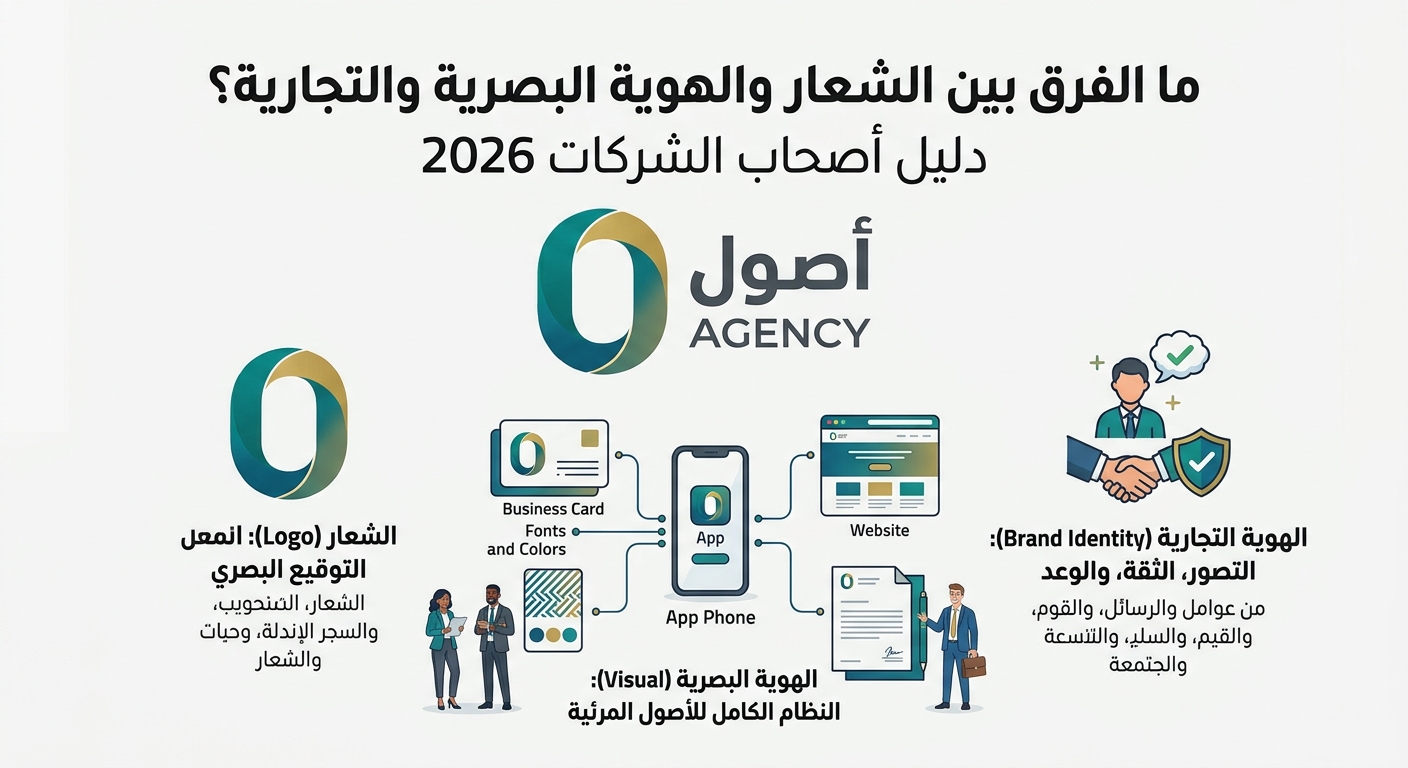
To eliminate strategic confusion for executive teams, corporate branding must be understood as a three-tiered hierarchy:
1. The Logo: The Identification Mark
A logo is simply "the face or official signature of a business." It is a symbol, logotype, or icon designed to facilitate immediate recognition in a crowded market. A logo does not explain what a business does; its sole function is to identify. A standalone logo represents less than 10% of the total brand experience.
2. The Visual Identity: The Integrated Visual System
A visual identity is "the comprehensive visual language of a company." It is the engineering system combining logo marks, official color palettes, typography hierarchies, imagery styles, and graphic patterns across digital and physical touchpoints. It ensures every document, ad creative, or web page communicates absolute corporate consistency.
3. The Brand Identity: The Overarching Personality & Soul
Brand identity is "the underlying persona and positioning of the business." It defines corporate mission, core values, tone of voice, market positioning, and target consumer emotional connection. Visual identity is the tangible visual expression of this strategic brand identity.
To see how we integrate these three tiers into a unified digital infrastructure, explore our full Visual & Corporate Identity Design Services at Osol Digital Agency.
In-Depth Comparison: Standalone Logo vs. Complete Visual Identity
To evaluate the operational gap between these two approaches, consider this side-by-side strategic breakdown:
| Strategic Dimension | Standalone Logo | Integrated Corporate Visual Identity |
|---|---|---|
| Core Objective | Basic visual identification and marking. | Building corporate trust, authority, and market dominance. |
| Deliverables Scope | Single image file of a mark. | Adaptive logo system + color palettes + typography + print/digital collaterals + Brand Book. |
| Consumer Psychology | Based on surface-level aesthetic taste without research. | Engineered around consumer purchasing psychology and subconscious value perception. |
| Scalability & Future Proofing | Breaks down when expanding to new ad platforms or digital UI interfaces. | Fully scalable across dark/light displays, mobile apps, field production, and AI search systems. |
| Financial Impact & ROI | Cheap initial cost, but causes hidden revenue bleeding and costly rebrands. | High-yield corporate asset that builds brand equity and increases conversion rates (CR). |
The Anatomy of a Corporate Visual Identity System
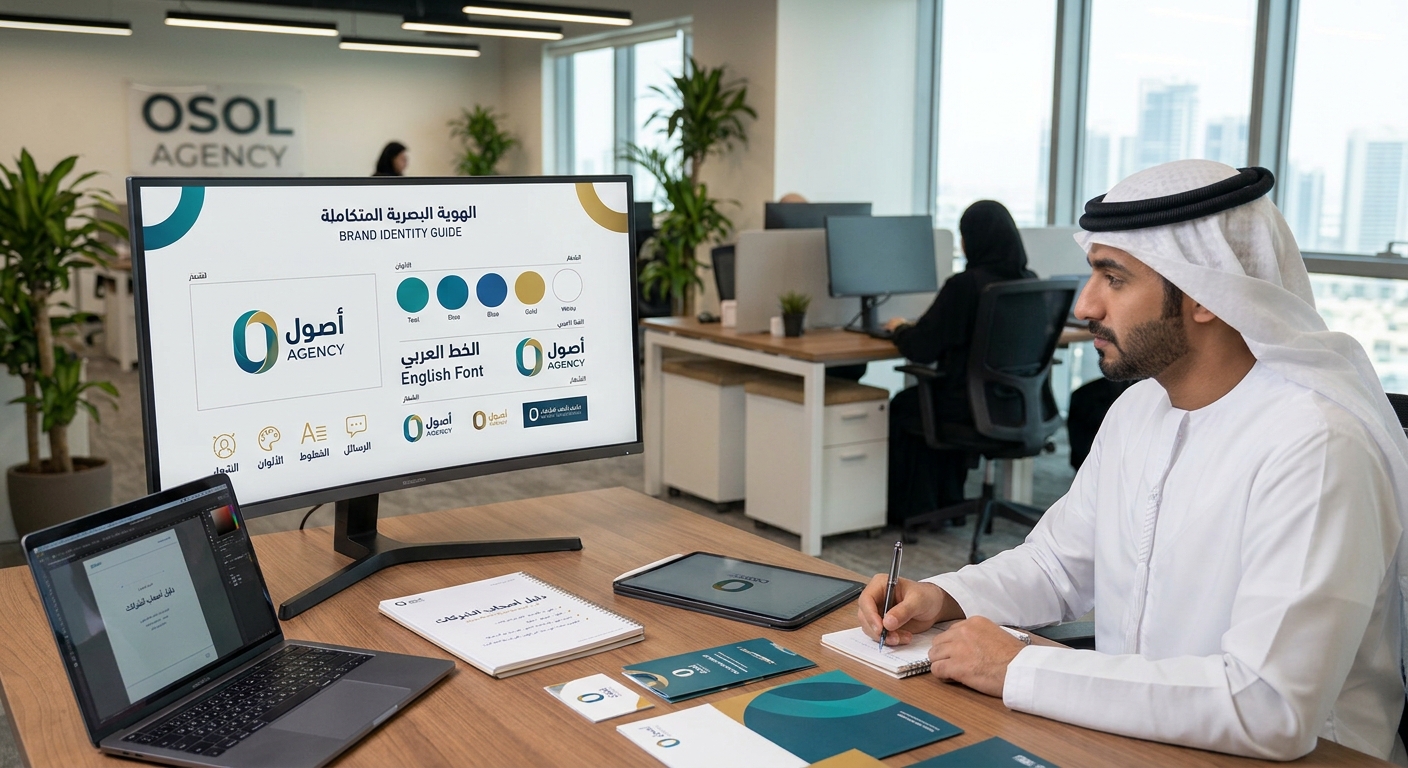
When partnering with a specialized corporate identity design agency, you invest in an interdisciplinary visual architecture comprising seven essential assets:
- 1. Adaptive Logo Family:
Primary mark, horizontal wordmark, stacked vertical variation, and responsive favicons/app icons. This guarantees crisp visibility whether displayed on a smartwatch interface or a building façade. - 2. Strategic Color Palette Architecture:
Primary brand colors, secondary accents, and contrast systems, defined across precise codes: RGB (screens), CMYK (offset print), HEX (web development), and Pantone (specialized manufacturing). - 3. Custom Typography Architecture:
Curated Arabic and English font hierarchies expressing corporate authority, covering header styles, body copy scales, and UI display fonts alongside full commercial digital licensing. - 4. Supporting Graphic & Pattern Systems:
Custom geometric shapes, brand patterns, and icon sets derived from logo genetics, providing immediate visual recognition across ad campaign backgrounds and UI layouts. - 5. Physical & Field Collaterals:
Corporate stationery (business cards, letterheads, envelopes, invoices, contract folders), staff uniforms, trade show displays, and vehicle fleet wraps. - 6. Digital Touchpoint Templates:
Social media ad frameworks, email signature banners, corporate pitch deck templates (PowerPoint/Keynote), and web UI styling guidelines. - 7. The Master Brand Guidelines Manual:
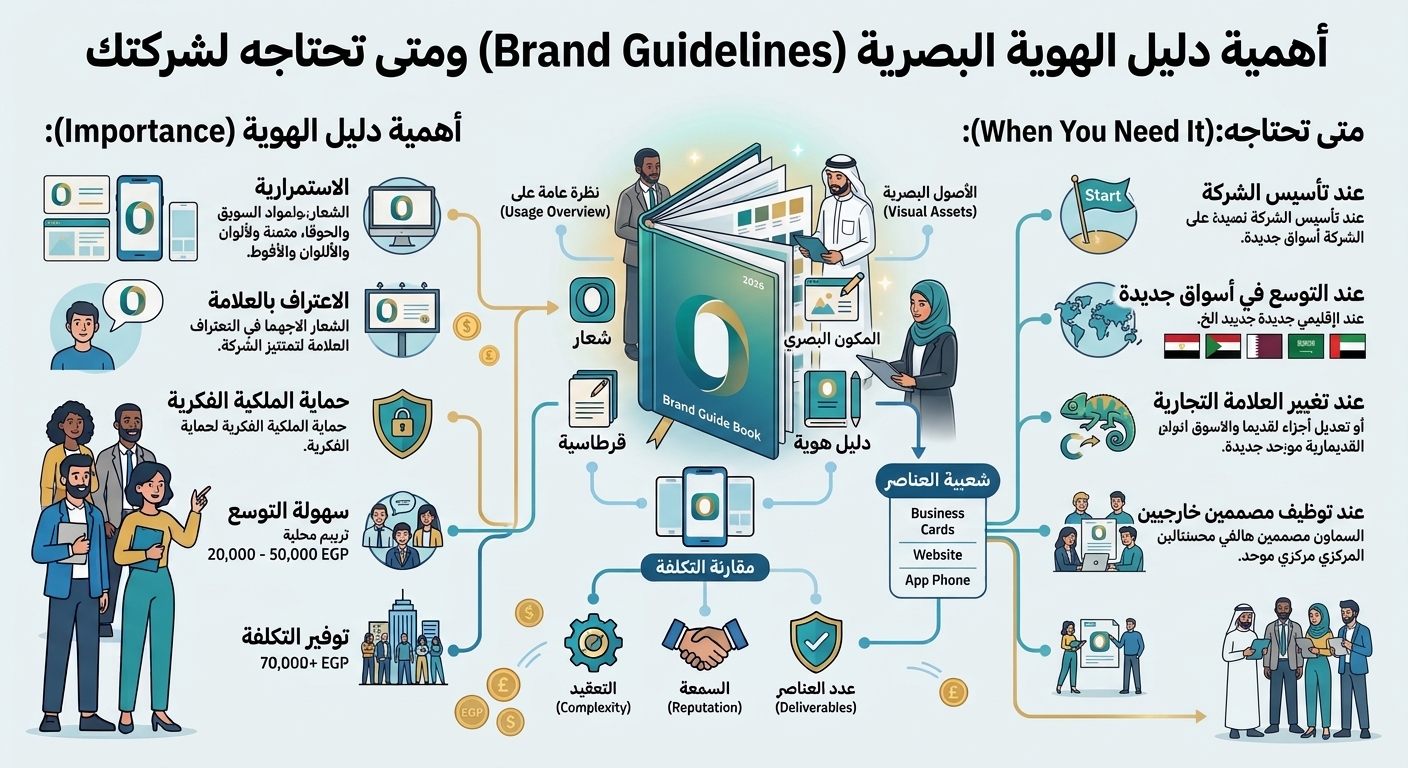
The official rulebook dictating clear space rules, minimum scaling, color contrast ratios, unauthorized usage rules, and operational guidelines to safeguard your brand asset forever.
How Strategic Visual Identity Scales Corporate Valuation
The primary differentiator between market leaders commanding massive market share and struggling competitors is **the ability to build instant subconscious trust through visual presentation**.
Here is how an integrated visual identity impacts your financial bottom line:
1. Command Premium Pricing Power
Consumers evaluate product quality through its visual presentation. When your company presents an authoritative visual identity, you can comfortably charge 200% higher rates than competitors with amateur branding without encountering price resistance.
2. Maximize Ad Campaign Efficiency (Higher Ad CTR)
Ad creatives anchored in a distinct visual identity capture user focus instantly in crowded digital feeds. Visual consistency drives higher Click-Through Rates (CTR) and reduces overall Customer Acquisition Costs (CAC).
3. Investor & Franchise Readiness
If your growth strategy includes securing venture capital funding, entering international markets, or franchising, a standalone logo carries zero valuation weight. Investors demand an official Brand Guidelines manual that proves your business model can be replicated seamlessly across global markets.
Frequently Asked Questions
We already have an existing logo. Should we rebrand or build a visual identity around it?
If your existing logo holds significant equity or market recognition, Osol Agency can execute a "Strategic Logo Refresh" to modernize its geometry for digital screens, then engineer the complete visual identity system around it without discarding brand equity.
How long does it take to build a complete visual identity compared to a single logo?
Designing a simple logo mark may take a few days, but leaves you without operational tools. A complete corporate visual identity project at Osol Agency spans 10 to 21 business days, delivering a plug-and-play operational brand asset.
What source files do we receive upon project completion?
You receive an organized digital package containing all editable vector source files (AI, EPS, SVG) for production, high-res web assets (PNG transparent, JPG, WebP), and the master Brand Guidelines PDF.
Can the visual identity be immediately implemented on our website and web app?
Yes. Every visual identity engineered by Osol Digital Agency is technical-ready, complete with CSS color variables and typography scales for seamless integration by software engineers.